BoredomBusted — Find Your Next Favorite Thing To Do
Discover hobbies, activities, places, and ideas that spark joy. Whether you're looking for something creative, active, social, or relaxing, BoredomBusted helps you find your next favorite thing to do.
Browse our hobby guides, things-to-do collections, and place ideas to never be bored again.
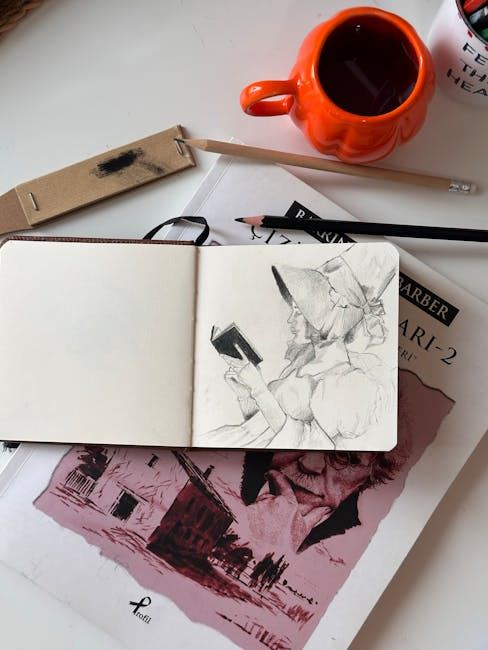
Life drawing isn't just about capturing the human form—it's a rapid training for observation that speeds up all your artistic skills.
Getting started with life drawing as a beginner involves understanding the fundamentals of capturing the human form within timed sessions that challenge your skills. Life drawing is the practice of sketching a live human model — usually nude — in timed sessions ranging from 30 seconds to 20 minutes.
You draw what's in front of you, no photos, no pausing.
Unlike figure drawing from reference images, the model breathes, shifts weight, and holds tension in ways a screen never replicates — and that gap is exactly what trains your eye.
In life drawing, participants observe a live model—often nude—holding poses and sketch their proportions, gestures, and shadows using pencils or charcoal. Sessions typically start with quick gesture sketches, progressing to longer poses where artists refine shapes and details, often experimenting with techniques like blind drawing or using multiple pencils, and culminating in informal critiques t…
Life drawing fosters immersion through flow states by requiring rapid visual scanning and mark-making, which allows artists to get lost in the model's form. Instant feedback through comparing sketches to the live model helps build skills and correct mistakes rapidly, while social belonging is nurtured in group settings that encourage supportive critiques. The unpredictability of live poses and ex…
You think life drawing is about portraying a naked person accurately.
You think it's a pass-or-fail test of your ability to draw the human body. But life drawing is about how quickly you learn to see and simplify — and that powers up every other drawing skill you have.
A graphic designer doing weekly sessions doubled her logo sketching speed in two months. Not by drawing more logos, but by trusting her first line instead of second-guessing.
The format of these sessions is why this works so quickly — and it's unlike any art class you're imagining.
Watching someone else sketch seems so serene. Their hand sweeps the page, and a person emerges. You try and find a figure with seven elbows and no neck. Your first session will surprise you. Proportions feel slippery, as the head always ends up twice the right size. You'll measure endlessly with your pencil. That repetitive gesture becomes second nature, not the drawing. Gesture drawings hint at progress by week two. The swift 30-second poses make sense in bursts. But a 20-minute drawing feels like a wall. Week three is tougher. Now you see all the flaws, even if they weren't obvious before. This awareness is progress, despite the frustration. Then, on week four, a drawing seems almost right. You can't pinpoint why, but it's a sign you're starting to connect dots. Focus on the weight and tilt of bodies first. If you outline from the start, you'll find the figure lacking depth and life. Expect a bad drawing. Then a worse one. Then that one that almost works. It's less about talent and more about your eye learning to guide your hand. Keep filling pages, and your eye will start to lead.
When to start: Early morning
Duration: 1.5 hours
Cost to try: $10
Success criteria: If you complete a 1-page figure sketch with the head, shoulders, hips, and limb angles placed consistently, do session 2.
Beginners instinctively trace the silhouette, but this approach is backwards. The eye naturally locks onto contours first, but this can mislead you.
Start with the gesture line through the spine and weight-bearing leg. Let the outline emerge organically instead of forcing it.
It feels wrong not to finish when the model stays still, leading to stiff and overworked drawings.
Set a timer for two minutes per pose. Move on when it rings, even if you're not done. Each incomplete sketch teaches you more.
Proportions seem obvious until errors make heads balloon into watermelons. Beginners often trust instincts over accuracy in scale.
Use your pencil at arm's length to measure. Close one eye and check head heights against other proportions before committing.
The brain defaults to its stored symbols for parts like hands or feet. This results in diagrams rather than realistic art.
Flip your reference upside down, even just mentally. Focus on capturing the actual shapes and angles you see.
Beginners often place feet evenly and distribute weight symmetrically, freezing the figure.
Identify the raised hip and drop the opposite shoulder. This contrapposto tilt transforms mannequins into lively figures.
Studio spaces, art centers, and community colleges host life drawing sessions regularly.
Galleries and artist co-ops in some cities offer drop-in nights as well. No need for a class structure, just show up to draw.
Mention you're new to the organizer. You'll likely get better seating and helpful pointers about the session.
Capture the essence of motion and proportion with poses lasting 30 seconds to 2 minutes. Detail isn't the goal here.
Perfect for beginners battling perfectionism. No need for special tools; any sketchbook will do.
Spend 20–45 minutes per pose to refine anatomy, shading, and structure.
Ideal for those who've mastered gesture drawing and want to enhance their skills. Consider using charcoal or conte crayon for better tonal range.
Model the figure in clay or wax from a live reference instead of drawing.
Perfect if drawing feels flat—build the form rather than represent it. Start with oil-based clay and armature wire, budgeting $30–50.
Use a tablet instead of paper for your sessions.
Frequent use of the undo button can stall progress. Better for those already comfortable with digital work, but beginners often fare better starting on paper.
Draw the figure without looking at your paper. The results are chaotic, but that's part of the process.
Great for beginners to train eye-hand coordination. No cost, no special needs.
Cartoon Drawing lives in the same world — different mechanics, similar appeal.
For something adjacent, see Manga Drawing.
Anime Drawing lives in the same world — different mechanics, similar appeal.
Learning to quickly assess spatial relationships in your drawings is crucial. Most beginners focus on details and miss the essence of figure drawing.
It's about seeing relationships on the fly. Measuring between landmarks helps you ground every line you draw.
Instead of questioning each part in isolation, ask how one dimension compares to another. Is the arm longer than the space from chin to shoulder? You start building a network, not isolated parts.
This approach quickly tightens your proportions. It anchors every stroke to something already on the page. Avoid mistakes by continually relating parts to one another.
Plan for six sessions over 30 days. Spread them out to let each experience settle.
If you're already considering the next pose before your class ends, that's a sign you're genuinely engaged. The challenge of capturing a body in space has captured you. Sign up for regular sessions and explore longer poses. The obsession is the signal.
Feeling indifferent after six sessions hints that the setup isn't clicking. Maybe it's the format, not the hobby. Try a different structure—slower sessions with longer poses or a more social setting. Test one extension, but two means it's probably not for you.
Watching the clock and dreading the next pose shows a clear mismatch. Some enjoy drawing but dislike the live, timed aspects. That's not a flaw, it's valid data. Consider sketchbooks and reference photos instead.
Noticing how bodies move and balance is a big signal. If you're already doing this naturally, you're suited for life drawing. It's about visual problem-solving, not just seeing.
Life Drawing is a deeper commitment than most boredom cures — for lighter options, check things to do when bored.
You'll need basic drawing supplies: pencils (HB, 2B, 4B), a sketchpad or drawing paper, an eraser, and a sharpener. Many beginners start with graphite pencils and paper before exploring charcoal, pastels, or other media. A life drawing class or group session typically provides a model, so you can focus on learning technique first.
You'll notice improvement in your observational skills within 4–6 weeks of regular practice, but developing strong anatomy knowledge and confident line work takes 3–6 months of consistent sessions. The key is frequent practice—many artists see the biggest gains by drawing 2–3 times per week.
Life drawing is accessible to beginners, though it requires patience and letting go of perfectionism. Early sessions focus on basic proportions and gesture rather than detailed accuracy, so you'll build confidence quickly. Most people find the learning curve rewarding because immediate feedback from live models helps you progress faster than drawing from photos.
Life drawing classes typically range from $15–$30 per session at community centers or art studios, with discounts for class packages or memberships. Many museums, colleges, and independent instructors offer drop-in sessions, and some communities host free or pay-what-you-wish drawing groups.
Gesture drawing focuses on quick sketches (30 seconds to 2 minutes) to capture movement and energy, while anatomical life drawing involves longer poses (10–30 minutes) to study proportions, muscle structure, and form. Most life drawing sessions blend both approaches—gesture warmups followed by longer studies.
While live models provide invaluable feedback and energy, you can practice alone using reference photos, mirrors, or by drawing yourself. However, live drawing sessions train your eye to capture movement and nuance that photos often miss, making group classes ideal for serious improvement.