BoredomBusted — Find Your Next Favorite Thing To Do
Discover hobbies, activities, places, and ideas that spark joy. Whether you're looking for something creative, active, social, or relaxing, BoredomBusted helps you find your next favorite thing to do.
Browse our hobby guides, things-to-do collections, and place ideas to never be bored again.
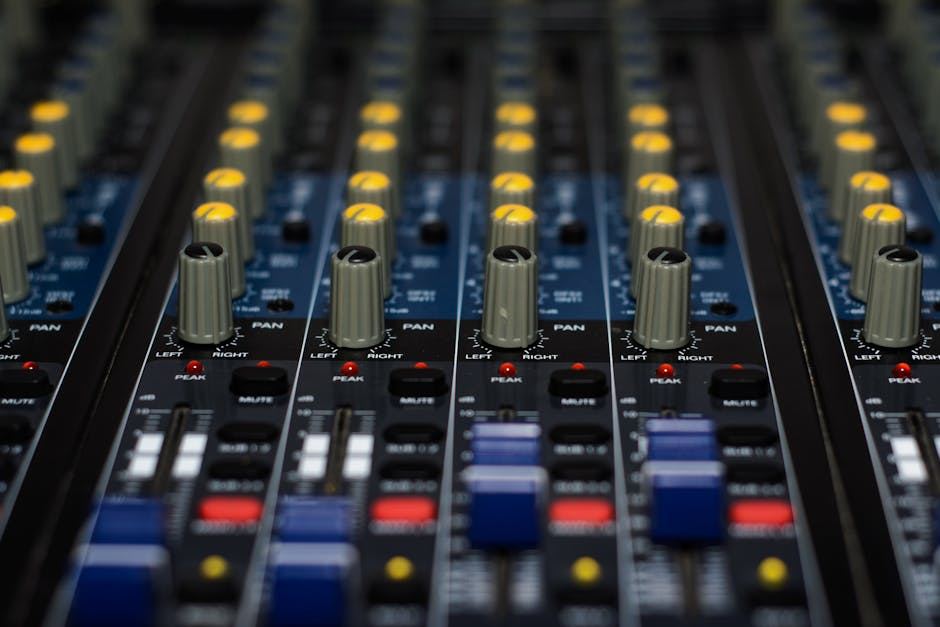
Forget passive listening—Sound Art immerses you in perception, like Cardiff's audio forest walk that transforms reality into a layered experience.
Learning sound art as a beginner involves understanding how audio serves as a creative medium in ways that go beyond traditional music. Recorded sound, generated tones, environmental noise: all of it becomes raw material you shape into something experiential.
The work takes forms that don't map onto normal music: installations that fill a physical space, compositions with no verses or choruses, field recordings warped until they're barely recognizable. There's no song to finish and no mix to deliver — which means your only benchmark is whether it produces the right feeling in the listener.
That absence of a finish line is either liberating or paralyzing, depending on the person. Most beginners find it both at once.
In sound art, you create and manipulate soundscapes using everyday objects, digital tools, or your own voice, transforming familiar sounds into immersive auditory experiences. This involves recording, layering, and altering audio to evoke emotions and provoke thought, often integrating visual elements to enhance the presentation.
Sound art engages your creativity and cognitive processes, allowing you to enter a flow state where time disappears as you focus on sound manipulation. This practice not only satisfies your creative drive but also offers incremental feedback on your artistic skills, creating a sense of accomplishment as you refine your unique style.
You picture Sound Art as someone playing rain sounds in a gallery while critics nod slowly.
Sound Art isn't passive listening dressed as fine art. It's about using audio to design perception itself.
Take Janet Cardiff, for example. She placed headphones on strangers and walked them through a forest. Layered audio like footsteps and whispers made the real world feel like a film set.
People stood still afterward, not because it was loud. Because it made them notice their own perception for the first time in years.
Your phone mic and free software like Audacity are enough to start. The idea matters more than the equipment.
That noticing is the whole skill. And the next question is how you actually start building it.
Building a sound piece seems so smooth from a distance. With a few clicks, everything appears intentional. But sitting in front of your setup can feel overwhelming. You discover you aren't sure what you're listening for, and that realization often makes people quietly close their projects.
Your early attempts may sound strange. Layers clash, and silence feels misplaced. Understanding comes when chaos transforms into creative control.
In the beginning, you gather countless sounds but don't use most of them. Gathering feels productive, even when actual composition feels out of reach. Your first creation will sound disjointed. However, that's how untrained audio begins to develop.
Unexpected connections will occur in small moments. A texture fits perfectly, or a well-timed pause resonates, validating the earlier chaos.
As you progress, you'll hear the world differently. This newfound awareness is refreshing and sometimes a bit overwhelming. But that's part of the journey.
The initial messiness isn't failure. It's a sign that your ears are still developing. That gap between skill and taste shrinks faster than expected by creating imperfect pieces rather than waiting for perfection.
One tip before you start: use your own sounds first. Recording familiar noises like footsteps, doors, or rain gives you a solid base. Working with the familiar helps as you learn to shape sound.
When to start: Morning
Duration: 1.5 hours
Cost to try: $25
Success criteria: If you finished without any technical difficulties, do session 2.
Most beginners hit the same five walls in the same order. None of them are about talent. They're about skipping a step that feels unproductive but isn't.
Grabbing a recorder and starting to capture feels productive. Sitting still with headphones on feels like nothing. So beginners skip the listening and go straight to collecting.
The fix is uncomfortable but fast: spend your first session recording nothing — just 20 minutes in one location with headphones, cataloguing what you hear at different distances and heights. You'll return the next session with a completely different sense of what's actually there.
A four-track drone sounds more impressive than one, so beginners stack layers to cover a weak foundation. The problem is that stacking never fixes weak source material — it just buries it.
Edit one recorded texture down to the 8-second slice that actually holds tension, then loop only that before you add anything else. If that single loop doesn't work on its own, nothing you stack on top will rescue it.
Reverb makes flat recordings feel spacious, so it becomes a reflex fix rather than a deliberate choice. Add enough of it and almost anything sounds atmospheric — for about thirty seconds.
Audition every sound completely dry before touching any processing. If it doesn't hold your attention without reverb, no amount of space will make it interesting. Reverb should enhance a sound that already works, not substitute for one that doesn't.
Most beginners point a mic at a source from arm's length, capture one texture, and move on. That's leaving two-thirds of the sound on the table.
Record every source at three distances — close, mid, and far — because each one is effectively a different sound. Close capture gives you grain and attack. Mid gives you body. Far gives you the room's relationship to the source. You now have three usable textures from a single recording session.
New sound artists lock onto a single pitch or texture because sustain feels meditative. It does — for a while. Then it just feels static.
Introduce one slow parameter change — volume, filter cutoff, or pan position — across 60 seconds. That single arc gives the piece direction without adding melody. The listener feels movement even when nothing obvious is happening.
Sound art thrives in unexpected places. Art galleries, experimental music venues, and maker spaces are hubs. Open studios at community arts centers are increasingly important, too.
No central governing body exists for sound art, but New Music USA serves a similar role in the US with grants, event listings, and regional contacts.
Introduce yourself by saying, "I make sound work but I'm still figuring out my process – I'm here to listen and learn."
This signals seriousness without overplaying your experience, often earning introductions to mentors, workshops, or gear access.
Take a portable recorder outside to capture raw sounds like wind, subway stations, and markets. The art lies in listening and selection, not in composing or synthesizing. Ideal for beginners — no need for music theory or software skills.
A decent handheld recorder like a Zoom H5 runs $200–$250.
Software creates sound following your set rules and surprises you with unplanned results. Ideal for people interested in systems thinking, coding, or embracing happy accidents. Max/MSP and Pure Data are the tools here; Pure Data is free, Max isn't.
Design sound for a specific physical space with carefully placed speakers. Focus on where it lives, not just what you make. Great for artists with experience in sculpture or spatial designs.
This route is pricier — you'll need multiple speakers, amplifiers, and possibly custom hardware.
Harsh, confrontational, and non-melodic sounds characterize this approach. It challenges traditional aesthetics, which can be freeing or alienating depending on your personality. Perfect for those who find conventional music too restrictive.
Combine sound art with environmentalism to record and analyze soundscapes, documenting ecological change. This is closer to activism than gallery work, making it perfect for those seeking a clear real-world purpose.
For something adjacent, see Wire Sculpture.
For something adjacent, see Armor Making.
For something adjacent, see Glass Fusing.
Most beginners focus too much on gear. They chase better microphones and cleaner interfaces. They think more plugins will fix everything.
The real bottleneck isn't equipment. It's the inability to hear what you've actually created.
The critical skill is developing your ability to hear spatial relationships. This means perceiving how sounds fill an imaginary space, not just judging whether they sound good.
Train your ear to question: is this sound near or far? Wide or narrow? Above or below? Static or moving?
This isn't a metaphor — it's a real sensation your listeners will feel. They'll notice it even before they're consciously aware.
When you develop this skill, your compositions gain depth. Listeners will subconsciously lean in.
Sound art that holds attention almost always relies on spatial depth. Yet few people teach it clearly.
Sound art invites you to engage with sound differently. You're focusing on texture, space, and time rather than melodies or beats. This shift either resonates with you quickly or it doesn't quite land.
Eight sessions over 30 days. Aim for twice a week, spaced close enough for your ears to develop a reference point. Too far apart, and it's like starting over each time.
Listen for 45–60 minutes per session. Split it between listening to field recordings, drone work, or sound installations, and making or experimenting. Even recording ambient sound on your phone counts.
Craving more sessions after eight attempts suggests you're hooked. If the hum of an HVAC unit inspires you with new sound possibilities, that's a solid sign you're on the right path.
Sessions feeling flat without any engagement means a neutral experience. Try incorporating a change, like focusing on a new sound source, before deciding to move on.
If you couldn't stand being there, that's a clear signal. Some people don't connect with the slow pace and unstructured exploration. It's okay to recognize sound art isn't for you.
Noticing background audio in films or how different rooms sound is a sign of the sound art mindset. If these observations steal your focus, you're naturally tuned into this hobby.
Sometimes you just need something for the next ten minutes — that's what things to do when bored is for.
You can start with basic tools like a smartphone, free recording apps (Audacity, GarageBand), and a microphone, which costs $20–50 for beginners. As you progress, you might invest in audio interfaces, synthesizers, or specialized speakers, but entry-level experimentation requires minimal equipment and budget.
Sound art differs from music production in that it prioritizes experimentation, texture, and conceptual meaning over traditional melodies and rhythm structures. While music production follows established conventions, sound art challenges listener perceptions by using unconventional sounds, silence, and immersive spatial arrangements.
Simple sound art experiments can take hours, while complex immersive installations may require weeks or months of conceptualization, recording, and refinement. Timeline depends on your vision, available equipment, and whether you're working solo or collaboratively.
No formal musical training is required—sound art emphasizes creative exploration and concept over technical skill. Many sound artists come from visual art, technology, or performance backgrounds and learn through experimentation and practice.
Sound artists explore themes like environmental soundscapes, emotional storytelling, spatial audio, abstract noise, silence, and interactive listener participation. Approaches range from field recordings and ambient compositions to algorithmic generation and live performance-based work.
You can share sound art on platforms like SoundCloud, Bandcamp, and YouTube, or submit to galleries, museums, and sound art festivals that curate experimental audio work. Online communities and local art venues also welcome sound installations and performances.