BoredomBusted — Find Your Next Favorite Thing To Do
Discover hobbies, activities, places, and ideas that spark joy. Whether you're looking for something creative, active, social, or relaxing, BoredomBusted helps you find your next favorite thing to do.
Browse our hobby guides, things-to-do collections, and place ideas to never be bored again.
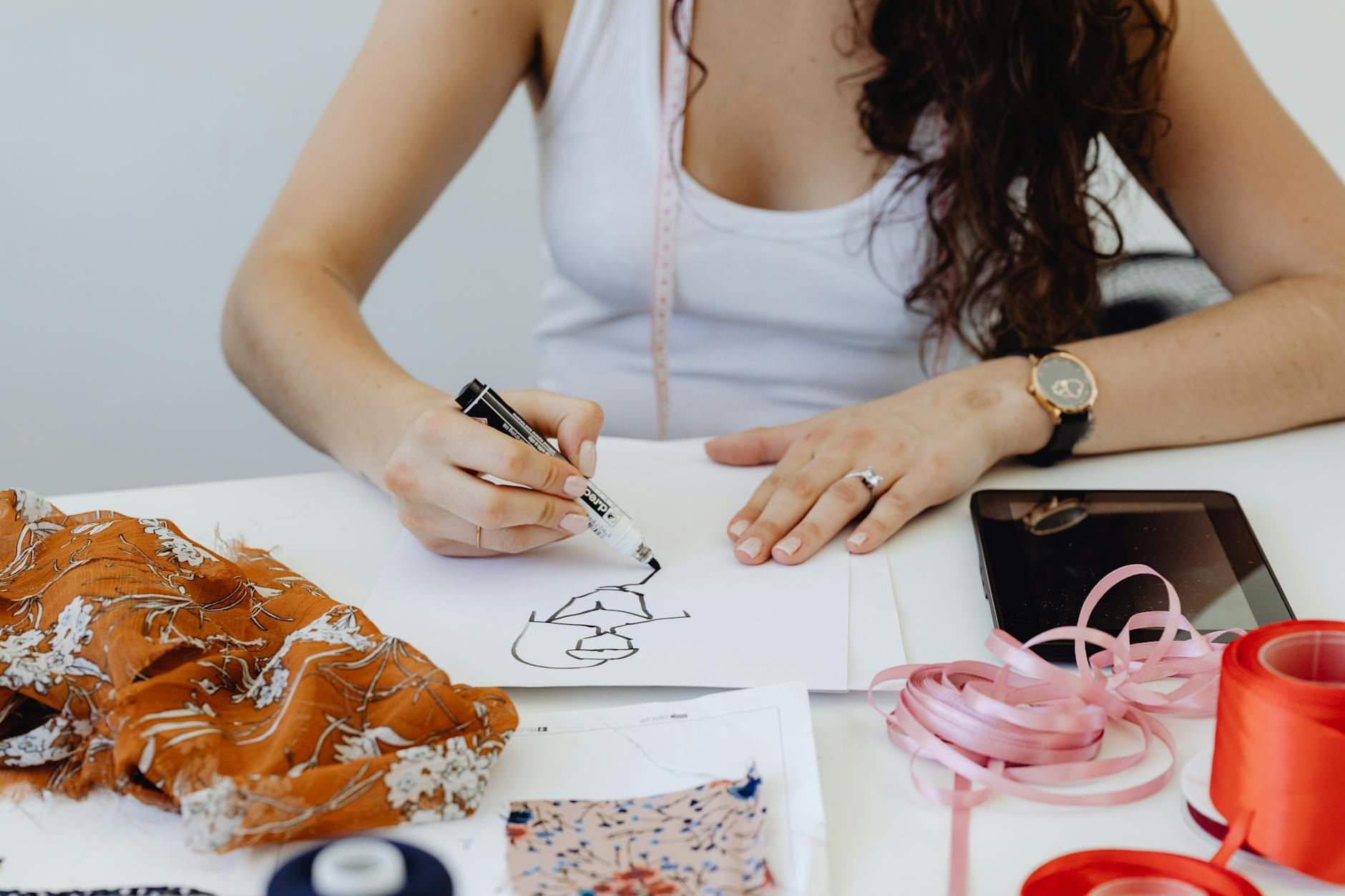
Textile design isn't about aesthetics; it's a math-heavy puzzle where historical weaves and technical constraints define your patterns rather than the colors you choose.
Learning textile design as a beginner involves mastering the art of creating patterns, textures, and surface graphics for fabric, whether through digital means or traditional techniques like screen printing and weaving. Unlike sewing or knitting, you're not building a garment – you're creating the material itself, which puts the creative decision one step earlier in the process.
In textile design, you sketch fabric patterns and motifs, then translate these designs into physical textiles by painting, printing, or embroidering. You may carve printing blocks, set up looms, or experiment with color combinations and fiber textures, resulting in unique fabrics for garments or home decor. This hands-on process involves meticulous actions like stitching, weaving, or block printi…
Textile design fosters a flow state through the repetitive yet skill-building actions of creating patterns, providing immediate visual feedback that reinforces motivation and satisfaction. The sense of accomplishment comes from end-to-end ownership of the creative process, while the potential for creative expression allows for personal infusions into textiles, combating boredom through engaging, …
You think textile design is about picking fabric colors for throw pillows. Maybe some pattern-matching, a mood board, a Pinterest aesthetic made physical.
That's the assumption — and it's exactly backwards from what this actually is.
Textile design sits at the intersection of chemistry, geometry, and cultural history. A weave structure from 14th-century Persia can directly inform a pattern you draft today — and understanding why it worked tells you something math alone can't.
Thread count, repeat logic, colorway reduction, print registration: these are the puzzles that make every finished piece feel earned. The technical constraints aren't limits — they're the whole game.
A surface designer once spent three weeks on a single botanical repeat — not because she was slow, but because she was tracking how the motif would tile across a 27-inch fabric width without creating an unintentional visual seam. A solo designer and a studio producing for retail are solving identical problems — the math doesn't care about the volume.
The final pattern looked effortless. That's the point. The work disappears into the result.
The tools and the starting point are closer than you think — and that's exactly what the next section is about.
Watching someone work fabric into a repeating pattern looks meditative. Clean lines, confident motions, finished work that belongs in a store. Your first session will not look like that.
The first week is mostly repeat logic — you spend more time understanding how a tile works than actually designing anything. Week two, you finish something, it looks off, and you can't explain why. Feeling that something is wrong before you can name it is genuine progress.
By week three, you fix one real problem — scale, color balance, or tile alignment — and the whole piece shifts noticeably. Week four, you're standing in a fabric store reverse-engineering repeat structures off the shelf. The eye trains even when you're not at the desk.
Ugly work. Broken tiles. Nothing cohering. That's your visual vocabulary building in real time — not failure. Most beginners quit right before week three, which is exactly when the eye catches up to the hand.
Start with a half-drop repeat, not a straight repeat. Straight repeats expose every alignment mistake immediately — half-drops hide the seams and give you room to actually design while you're still learning the grid logic. The next section covers the mistakes that keep beginners stuck in the frustrating half longer than necessary.
When to start: Morning
Duration: 1-2 hours
Cost to try: $25
Success criteria: If you can turn one theme into a swatch collage with at least 3 cut fabrics, 2 pattern sketches, and a labeled color palette, do session 2.
Digital tools make it easy to start drawing, so most beginners skip the foundational logic of how a pattern tiles across fabric.
Before opening Photoshop or Procreate, sketch your motif on paper and physically trace how it repeats – half-drop, brick, or full-drop – so the logic lives in your hands first.
A motif that looks balanced on screen can become overwhelming at 1:1 on a duvet or disappear entirely on a bookmark.
Mood board colors are often photography-based and won't survive the translation to fabric dye or digital print without going muddy or flat.
It's one thing to draw a beautiful bird. It's another for that bird to sit inside a repeat without awkward cropping or obvious grid lines.
Design with your canvas edges in mindfrom the first mark – use the offset filter in your software early, not as a final fix.
The gap between a calibrated monitor and printed cotton is wider than most beginners expect – and it will surprise you every time until you've felt it.
Textile design happens wherever you can spread fabric and make a mess – home studios, community makerspaces, and dedicated textile studios are the most common setups.
Check makerspace and community art studio pages for venues near you that offer equipment you won't want to buy on day one.
Walk in and say:
"I'm new – I've never printed on fabric before, what would you suggest I start with?"
That one sentence gets you a material recommendation, a technique shortcut, and usually someone who offers to show you rather than just tell you.
You're working with finished fabric — adding pattern, color, and texture on top rather than constructing the weave itself. Screen printing, block printing, and dye techniques like shibori all live here.
This is the best entry point if you want visible results without learning to thread a loom. A basic block printing kit runs $20–$40.
Weaving is structural textile design. You're interlacing threads on a loom to control pattern, weight, and drape — building the fabric itself rather than decorating it.
It's slower and more technical, but deeply satisfying if you like understanding systems rather than just decorating surfaces. A rigid heddle loom — the standard beginner entry point — runs $150–$300.
Embroidery and needlework create pattern through stitching onto an existing base fabric — thread is the medium. No special equipment, no loom to assemble, no dye bath to mix.
This is the lowest-friction entry into textile design — a needle and some thread is genuinely all you need to begin.
Knitting and crochet use yarn and hand tools to build fabric stitch by stitch — pattern comes from structure, not added decoration. Technically textile design, though most knitters don't frame it that way.
The real advantage here is portability — this is the one textile discipline you can practice on a couch, a commute, or a flight.
Digital textile design means building patterns in software — Adobe Illustrator, Photoshop, or dedicated tools like Repeat Finder — intended for print-on-demand or industrial production. No physical materials required until you order a test print.
Print-on-demand services like Spoonflower mean you can test a real printed design for under $20 — the fastest path from screen to physical fabric.
If the texture of this appeals to you, Leathercraft is built on similar bones.
Egg Arts lives in the same world — different mechanics, similar appeal.
Some of the same instincts show up in Pottery — worth a look if this clicked.
Most beginners obsess over color palettes — spending hours on hue combinations while their patterns fall flat anyway. Color isn't the problem.
The thing that actually changes your results is understanding repeat structure — the logic of how a single motif tiles across fabric. Specifically: knowing the difference between a block repeat, a half-drop, and a brick repeat.
Beautiful isolated.
Bizarre at scale.
And you'll never know why — until you realize you weren't designing an image, you were designing a system. Every professional textile designer is solving a tiling problem first, a beauty problem second.
Once that clicks, you stop asking "why does this look off on yardage" and start catching the issue before you ever hit print. The next section covers exactly where to practice this — and which repeat type to start with.
Thirty days. Eight sessions. That's the test.
Eight sessions works for textile design specifically because the early curve isn't steep – it's slow. You need enough repetitions to feel the difference between a session where the pattern clicks and one where you're just pushing dye around. That gap is where real interest lives.
If you want to come back – and you're already sketching color combinations between sessions – your brain is working the problem in the background. That's not just enjoyment; that's the hobby running. Move toward structure: pick one technique (block printing, repeat pattern, natural dyeing) and go deep on it.
If you're indifferent – finished the sessions, it was fine, nothing pulled you back – that flatness usually points to the medium, not the making. Try shifting the context before you walk away. Swap solitary practice for a workshop or community class; textile design can feel completely different when there's shared momentum in the room.
If you actively didn't want to be there – if the patience required felt like punishment, not process – that's honest data. Textile design is repetitive by nature. If the repetition felt like friction instead of rhythm after eight attempts, that's the job telling you something – not a warm-up phase.
You stop in front of fabric at a market – not to buy, just to look at how the pattern was built. If you're already reverse-engineering a scarf hem or a tea towel repeat, the interest preceded this article. That's worth taking seriously.
Chemical sensitivity or respiratory issues are a real barrier. Dyes, fixatives, and mordants are central to most techniques, and many aren't fully replaceable with natural alternatives without significant trade-offs in quality.
If your living situation gives you no access to water, ventilation, or a surface you can wreck, the logistical overhead will grind you down before the skill builds. This hobby needs dedicated space more than most crafts do.
Finally, if you need fast visible results to stay engaged, textile design will fight you. A single repeat pattern from concept to finished swatch can take multiple sessions. The payoff is real – but it's not quick.
For quicker fixes, see our roundup of things to do when you're bored.
Start with basic supplies: sketchbooks, colored pencils or markers, fabric swatches, and a ruler for pattern layouts. As you progress, you can invest in design software like Adobe Illustrator, screen printing or dyeing kits, and a small loom or weaving frame. Many beginners begin with hand-drawing and collage techniques before moving to advanced tools.
Basic skills like pattern creation and color theory take 4–8 weeks of consistent practice. Mastering techniques like screen printing, weaving, or digital design typically requires 6–12 months of regular practice. Professional-level expertise usually develops over 1–2 years of dedicated study and experimentation.
No, textile design is accessible to beginners because it combines foundational concepts like color, symmetry, and repetition rather than requiring drawing precision. Online tutorials, templates, and structured courses make it easy to learn at your own pace. Many successful textile designers started without formal art training and developed skills through practice.
Entry-level costs range from $30–$100 for basic hand-design supplies like sketchbooks, markers, and fabric samples. For dyeing or screen printing, expect $150–$400 for a starter kit. Digital design requires software subscriptions ($20–$55/month for Adobe), though free alternatives like Krita or Inkscape are available.
Yes, many hobbyists monetize textile designs by selling patterns online, licensing designs to fabric manufacturers, or creating custom printed textiles through print-on-demand services. You can also offer freelance design services, teach workshops, or sell handmade textiles at markets and online stores. Income depends on your skill level and marketing effort.
Textile design focuses on creating patterns, colors, and textures for fabrics themselves, while fashion design uses those textiles to create wearable garments. Textile designers work on the material level (prints, weaves, dyes), whereas fashion designers work on garment construction and styling. Both skills can complement each other, but textile design is narrower in scope.