BoredomBusted — Find Your Next Favorite Thing To Do
Discover hobbies, activities, places, and ideas that spark joy. Whether you're looking for something creative, active, social, or relaxing, BoredomBusted helps you find your next favorite thing to do.
Browse our hobby guides, things-to-do collections, and place ideas to never be bored again.
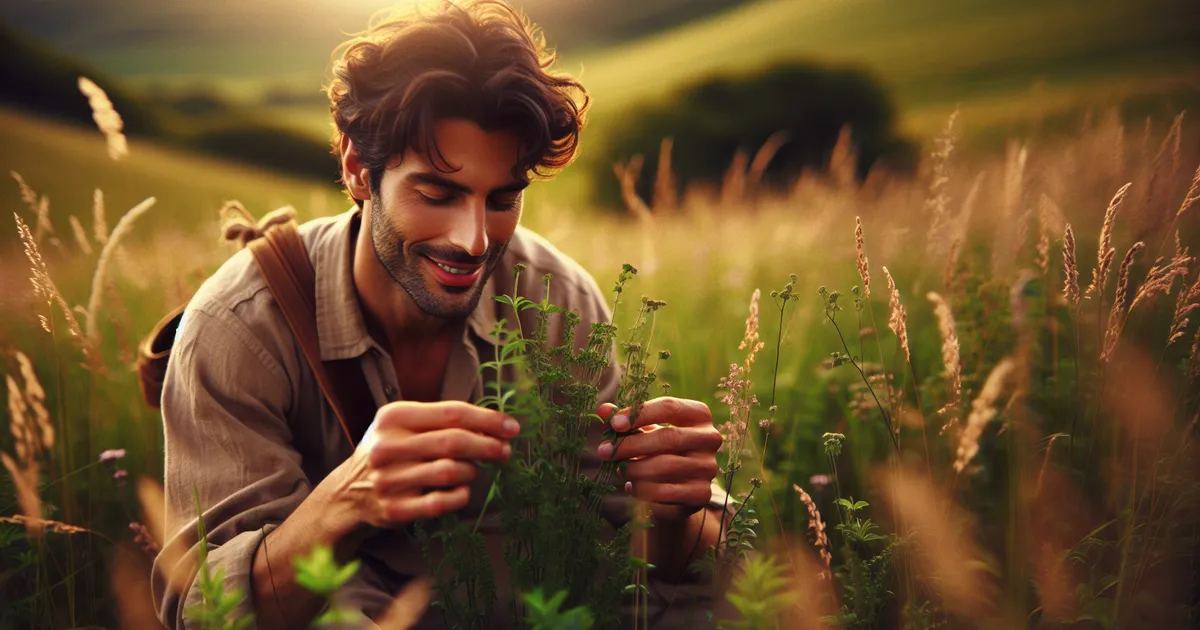
Foraging isn't just about avoiding toxic leaves; it's a complex skill of interpreting the landscape's history and ecology, revealing unseen narratives.
Getting started with wild herb foraging as a beginner opens up a world of identifying and using nature's own medicinal and culinary plants that thrive without cultivation.
You walk a landscape – forest edge, meadow, roadside – read what's growing, and take only what you can identify with certainty.
Unlike gardening, nothing is planted.
Unlike hiking, the plants are the point.
In wild herb foraging, you actively search for and identify edible plants in nature, harvest them, and often prepare them for culinary use, engaging your senses and enhancing your knowledge of local flora.
This hobby fosters a flow state through focused attention on the intricate details of plant identification and harvesting, offering immediate feedback as you see the results of your efforts in the kitchen.
You think foraging is about knowing which leaf won't kill you. That's it.
That's the whole mental model most people walk in with.
Every herb you find tells you something about the soil, the moisture, the history of that patch of land. You're not collecting ingredients — you're reading a landscape. That shift in framing is what separates someone who finds one edible plant from someone who understands why it's there.
Foraging trains a specific kind of attention — the ability to see what's always been there. Most people walk through the same woods for years and notice almost nothing. That changes fast once you know what to look for.
The identification process is a logic system, not a memory game. You're cross-referencing smell, texture, habitat, season, and leaf shape simultaneously. It's closer to diagnosis than to treasure hunting — and that's exactly why it sticks.
A forager found yarrow growing through a crack in a city parking lot. That single plant told her the lot had once been disturbed soil — probably a demolition site — because yarrow colonizes exactly that kind of ground.
She wasn't just finding an herb.
She was reading history.
Through a crack in asphalt.
That's what this hobby actually gives you — a new way of seeing places you've already been a hundred times.
Knowing why you're looking changes what you see — and the next section is where that actually starts.
Watching someone forage on YouTube looks effortless – they reach down, identify three plants in ten seconds, and walk away with a full basket.
Your first session will involve crouching over the same patch of ground for four minutes, unsure if you're looking at wild garlic or something that will ruin your weekend.
That gap is normal. It's also exactly where most people give up.
Before: Confident. Every plant looks identifiable. You've watched the videos. It seems obvious.
After: Hesitant. Fifteen plants you can't name. One you're 70% sure about. Basket mostly empty.
Week 1: You identify one plant with certainty – probably *dandelion* – and spend the rest of the walk second-guessing everything else.
Week 2: You start noticing habitat patterns, realizing certain plants cluster near water or woodland edges, which quietly doubles your find rate.
Week 3: You make your first confident multi-plant identification, then go home and spend an hour cross-referencing it anyway.
Week 4: You stop looking for plants and start reading the landscape – and that shift is when foraging actually begins.
Nothing. One plant.
One plant, for real.
It feels laughably slow – until you realize that one plant, identified correctly and harvested safely, is the entire foundation everything else gets built on.
Before your first session, learn the toxic lookalike for whichever plant you're targeting – not just what the plant looks like, but what grows near it that could fool you.
Wild garlic and three-cornered leek are both edible, but they grow alongside *lords-and-ladies*, which isn't. Knowing the imposter matters more than knowing the target.
When to start: Early morning
Duration: 1 hour
Cost to try: $0
Success criteria: If you correctly identify three edible wild herbs and note one key feature for each without harvesting any unknown plant, do session 2.
Identifying by One Feature Instead of the Whole Plant New foragers lock onto a single detail – the leaf shape, the smell – and stop looking there. Cross-check at least three features every time:
and if safe to do so, smell.
Harvesting Without Knowing the Poisonous Lookalike First Wild carrot and poison hemlock look nearly identical to someone who just learned wild carrot. Before you learn any edible herb, learn its most dangerous lookalike first – that's the knowledge that actually keeps you safe.
Using a Single Field Guide as Gospel One guide might show your plant in summer. You're foraging in early spring when it looks completely different. Cross-reference at least two regional guides, and add a plant-ID app like *iNaturalist* as a third opinion – not a replacement.
Picking in the Wrong Places Beginners focus on finding the plant and forget to ask what's been sprayed, dumped, or run off into the soil there. Avoid roadsides, agricultural field edges, and urban greenways – the plant might be correct and still be full of heavy metals or herbicide residue.
Stripping the Patch Clean Taking everything you find feels like a win. It guarantees there's nothing to find next season. Harvest no more than a third of any stand, skip plants that are the only specimen in the area, and rotate your patches across visits.
Foraging happens wherever wild plants grow — national forests, state parks, nature preserves, and overgrown edges of local hiking trails. Urban foragers work city greenways and riverbanks. Rural foragers go deeper into woodland and meadow.
Search "foraging walk [your city or county]" on Meetup.com — this returns actual guided outings, not just discussion groups. Also search "herb walk [your state] + herbalist" on Facebook Events — local herbalists regularly lead paid or free public forages and post them there first.
The North American Mycological Association (NAMA) chapter finder is worth bookmarking even if your interest is plants, not fungi — many NAMA chapters run plant foraging events alongside fungi walks. The American Herbalists Guild (AHG) member directory at americanherbalistsguild.com is the other stop. AHG practitioners host workshops regularly and know every local foraging community worth joining.
When you show up, say: "I'm a complete beginner — I won't eat anything I can't confirm with a second opinion." That one line marks you as someone worth teaching. Experienced foragers will pull you in for plant ID coaching instead of just letting you trail along.
Woodland foraging pulls you onto shaded forest floors after plants like ramps, wood sorrel, and wild garlic. The light is different, the seasons shift earlier, and the ID challenges are harder than open meadow work.
Best for foragers who already have meadow plants dialed in and want more complexity.
Plantain, dandelion, chickweed, and cleavers grow in parks, vacant lots, and your own backyard. Familiar ground makes plant ID less overwhelming and mistakes easier to catch — the clearest starting point for beginners.
Medicinal herb foraging narrows the focus to plants with documented therapeutic use — elderflower, St. John's Wort, nettle for teas and tinctures. It adds a layer of preparation knowledge most casual foragers skip.
Best for people drawn to herbalism. A few reference books specifically on plant medicine are worth adding to your shelf here.
Sea purslane, marsh samphire, and sea beet grow where standard foraging guides stop covering things. Tidal timing and terrain access add logistical layers that don't exist on a dry hillside.
The flavors here are unlike anything inland — worth pursuing if you want a genuinely distinct foraging experience.
Some foragers pick one season and go deep — learning every spring ephemeral or every autumn hedgerow plant in their region. Going narrow on purpose is the fastest way to actually retain what you're learning.
Works well for anyone who tends to spread too thin early on.
Readers who enjoy this often gravitate toward Mushroom Foraging next.
Berry Foraging lives in the same world — different mechanics, similar appeal.
If the texture of this appeals to you, Fire Building is built on similar bones.
Wild Herb Foraging is a skill that goes beyond memorization.
Most beginners obsess over memorizing species – flashcards, apps, field guides dog-eared to ruin. But plant ID isn't the bottleneck. Habitat reading is.
The one skill is learning to read a landscape before you ever look at a plant – knowing which plants want to grow in a given patch of ground based on soil, moisture, light, and disturbance history.
An experienced forager walks into a hedgerow and already expects cleavers, nettles, and garlic mustard before crouching down. They're not searching. They're confirming.
When you understand habitat, you stop wandering and start navigating – you go to disturbed ground for chickweed, south-facing slopes for thyme, shaded stream banks for watercress.
Without it, you're always surprised by what you find, which means you're always second-guessing your ID. Uncertainty compounds fast when you didn't expect the plant to be there in the first place.
Before identifying anything, spend five minutes describing the site out loud:
Pick one habitat type – say, disturbed urban edges – and visit it weekly for a month, tracking exactly which plants appear, spread, or disappear with seasonal changes.
Cross-reference a plant's ID with its habitat preferences in a flora reference (not just a foraging guide) – if the habitat doesn't match, treat the ID as unconfirmed regardless of how confident you feel.
Commit to 6 sessions over 30 days — roughly one and a half per week, spaced enough apart to notice what stays with you between them.
If you're catching yourself scanning every roadside verge and crouching over weeds between sessions, that's the signal. The hobby isn't the sessions — it's the changed way of looking that spills into everything else. Start a simple ID log and get a second field guide before you do anything else.
If you went, it was fine, and you didn't think about it afterward, you were probably foraging without a question driving you. Two more sessions with a single specific target — one plant, one confirmed ID — will tell you whether the interest is dormant or just absent.
If you felt low-level dread before each session and the discomfort wasn't nerves, it was boredom, that's a clean answer. Some people want the idea of foraging more than the slow, uncertain reality of it. Close the tab.
You're already stopping on walks to crouch down and look at something — a weed in a crack, a leaf shape you don't recognize, something you want to name. That pull toward identification is the exact instinct foraging runs on, and if it's already happening unprompted, this hobby has somewhere real to go.
You don't have consistent access to green space. A city park works early on, but foraging scales with habitat variety — dense urban environments will cap your progress fast and your interest faster.
You're managing a health condition affected by plant compounds. Wild herbs can interact with medications or trigger allergies. Casual, unsupervised harvesting carries real practical risk here — not a theoretical one.
Your schedule runs in short, unpredictable windows. Foraging rewards slow, unhurried attention — if you're squeezing 20 minutes between obligations, you'll consistently leave before the session actually starts working.
Yes, if you start with easy-to-identify herbs like mint, basil, and rosemary that have no dangerous lookalikes. Always use multiple identification sources, forage in clean areas away from roads and pesticides, and never eat anything you're not 100% certain about. Joining a local foraging group or taking a guided walk is an excellent way to learn safely.
You only need a few basics: a good field guide or plant identification app, a small knife or scissors for cutting, and a basket or bag for collecting. Many foragers also carry a magnifying glass, camera for photo reference, and gloves to protect their hands. Most of this costs under $50 to get started.
You can confidently identify 5-10 common herbs in just a few weeks of regular practice, but mastery takes months or years of hands-on experience across seasons. Start by focusing on 3-4 herbs at a time, revisiting them in different growing stages to internalize their characteristics.
Spring and early summer are prime foraging seasons when herbs are tender and nutrient-rich, though many herbs can be harvested through fall. The best time varies by species and location—for example, some roots are best harvested in fall when plants have stored energy underground. Check your region's growing calendar for optimal timing.
Yes, you can eat many wild herbs immediately after harvesting and rinsing them, though some benefit from drying for better flavor. Always wash foraged herbs thoroughly to remove dirt and insects, and remember that some herbs are stronger when fresh while others develop complexity when dried for a few days to weeks.
Foraging is simply gathering wild plants for personal use, while wildcrafting typically refers to harvesting at scale for commercial purposes or medicine-making. Both follow the same identification and sustainability rules, but wildcrafters are usually more experienced and harvest more deliberately to preserve the ecosystem.