BoredomBusted — Find Your Next Favorite Thing To Do
Discover hobbies, activities, places, and ideas that spark joy. Whether you're looking for something creative, active, social, or relaxing, BoredomBusted helps you find your next favorite thing to do.
Browse our hobby guides, things-to-do collections, and place ideas to never be bored again.
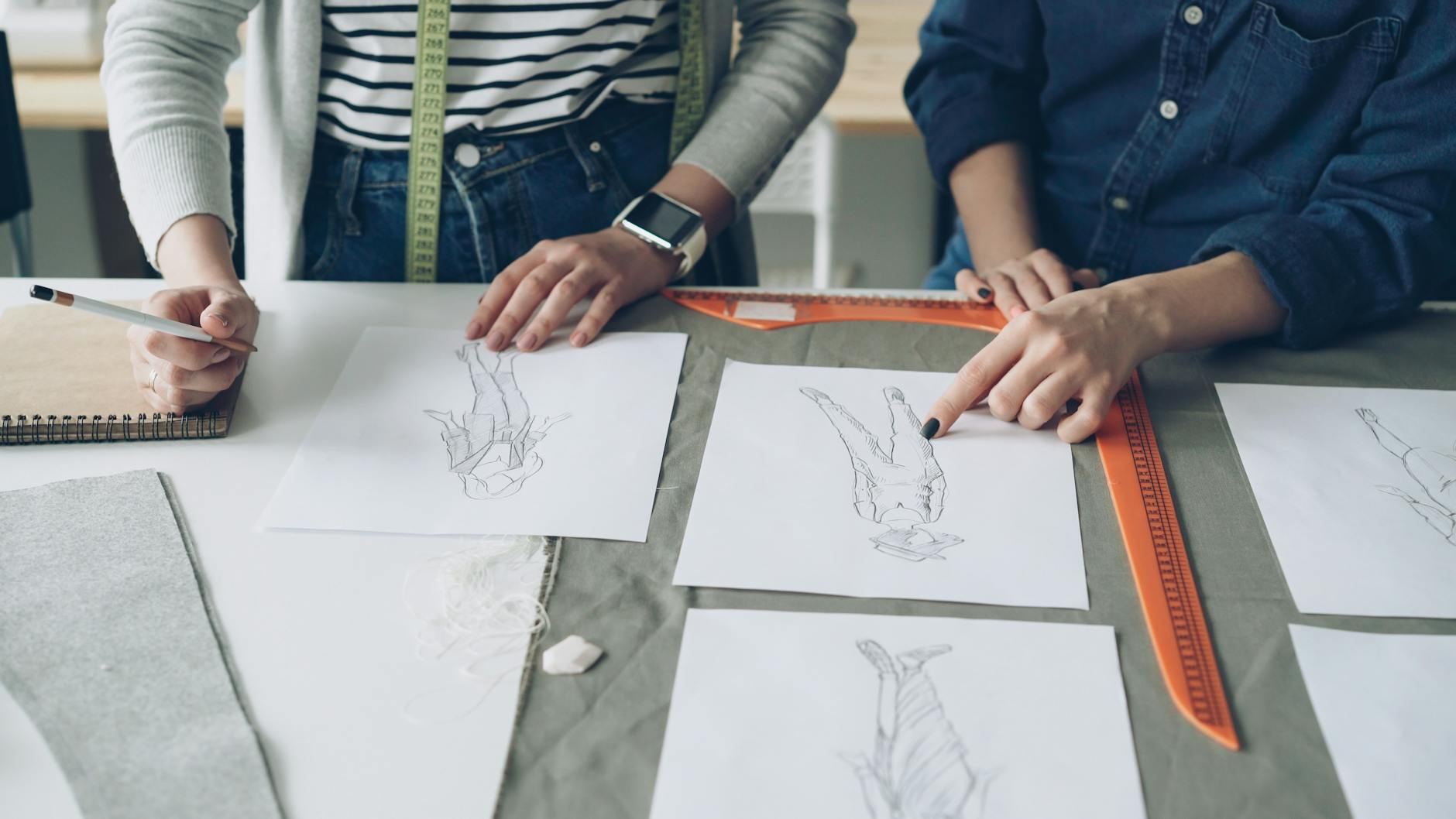
You don't need a fashion degree to succeed in design — self-taught passion can lead to impressive portfolios and opportunities.
Learning fashion design as a beginner involves transforming your creative ideas into wearable art that resonates with individuals. Fashion design encompasses a wide range of styles, techniques, and materials, making it a versatile and exciting field to explore.
Sketch designs, choose fabrics, and bring garments to life through sewing.
In fashion design, hobbyists engage in sketching garment ideas, selecting and handling fabrics, and sewing prototypes, iterating from initial concept to final wearable piece in a personal workspace.
Fashion design fosters a flow state through immersive creative processes and skill feedback loops, where tangible results from sewing provide immediate satisfaction and a sense of accomplishment as designs evolve into wearable art.
You think a fancy fashion degree is essential for success in design.
Creativity isn't reserved for the formally educated. Consider Coco Chanel—someone who never had formal training. Her determination and skill shattered that barrier long ago.
Passion. Practice. Consistency. With the ocean of free resources online, those are your real credentials.
You can craft an impressive portfolio that speaks louder than a diploma.
It's time to explore how technology is revolutionizing self-taught fashion design.
Your first session will likely be a pencil scratching paper for longer than you expected. Fabric swatches spread across whatever flat surface you have. A sketch that looks nothing like the image in your head. The gap between the garment you picture and the one you can currently make is the defining experience of early fashion design — and knowing that gap exists before you sit down saves a lot of frustration.
The part most beginners don't see coming is fabric. It moves, slips, bunches, and refuses to cooperate in ways that feel almost personal. A seam that looked straight while pinning comes out wavy. A hem you pressed flat curls back up the moment it cools. Fabric has its own behavior, and learning to work with it — not against it — takes more sessions than any tutorial will admit.
There are also the mental loops — second-guessing a cut you already made, restarting a sketch three times, staring at a sleeve that sits wrong without knowing why. That's not a sign you're bad at this. Those moments of confusion are exactly where the skill is being built, even when it doesn't feel like it. Every finished piece, however rough, is evidence you worked through something real.
The reward, when it comes, is physical — holding something you made and wearing it out of the house. That moment is worth protecting by not rushing the early, messy stages. Before you get there, though, there are some specific mistakes that derail almost every new designer. Those are worth knowing in advance.
When to start: Morning
Duration: 1.5 hours
Cost to try: $20
Success criteria: If you finish 3 labeled clothing sketches and one chosen design with colors, fabric, and style notes on paper, do session 2.
It feels productive to stock up on fabric early. But most beginners end up with a pile of material that doesn't suit their first project — wrong weight, wrong stretch, wrong weave. Then they either force it or abandon the project entirely.
Pick your pattern or sketch first. Then buy fabric specifically for that piece. Cheap cotton muslin is your best friend for practice runs — it's inexpensive, easy to sew, and lets you test fit before you touch anything you care about.
Jumping straight to cutting and sewing feels exciting. But without a sketch — even a rough one — you lose your reference point the moment things get complicated. Small decisions compound fast, and you end up somewhere you didn't intend.
A two-minute sketch saves hours of unpicking seams. It doesn't need to be technical or beautiful. It just needs to show you what you're building — silhouette, structure, where everything sits on the body.
Beginners rush measurements because they want to get to the making. Then the finished garment fits badly, and they assume they did something wrong in the sewing. Usually the error was earlier — a centimetre off in the body measurements translates into a garment that pulls, gaps, or bunches.
Measure twice, in the right spots, with the tape held snug but not tight. The four measurements that matter most for most beginner projects are bust, waist, hips, and torso length. Get those right and everything downstream becomes easier.
A dramatic structured blazer or a full ball gown looks incredible on a mood board. But both require techniques — tailoring, boning, lining, hand-stitching — that take real time to build. Starting there almost guarantees a frustrating result and a project that never gets finished.
Your first three projects should each teach you one new skill, not five. A well-fitted pair of trousers. A simple skirt with a clean zip. A shirt with a flat collar. Each one builds the foundation the ambitious stuff actually needs.
Fashion design is a 3D problem solved on a flat surface. What looks balanced in a sketch or flat on a table can look completely different once worn. Beginners often finish a piece, wear it once, and notice problems they can't diagnose — because they never built the habit of evaluating fit as they go.
Try the garment on — or put it on a dress form — after every major construction step, not just at the end. Catching a fit issue after attaching a sleeve is annoying. Catching it after you've sewn the whole thing shut is a much bigger problem.
Start on Reddit. r/fashiondesign and r/sewing are the most active communities for feedback, questions, and work-in-progress sharing. Both have beginners posting alongside experienced designers daily.
Instagram and TikTok have thriving fashion design niches — search hashtags like #fashiondesigner, #sewingcommunity, and #patternmaking to find creators at every skill level. YouTube channels like Evelyn Wood and Mimi G Style double as community hubs with comment sections full of working designers.
Local fabric stores — especially independent ones — regularly host sewing circles and beginner workshops. Community colleges often run non-credit fashion and garment construction courses that double as networking opportunities. Search Meetup.com for sewing or fashion design groups in your city; most major metros have active ones.
For structured community with real accountability, look into the Fashion Group International (FGI), which has chapters in dozens of cities and runs events open to non-members.
Fashion illustration focuses on drawing garments rather than building them. You develop an eye for proportion, silhouette, and fabric movement—all on paper or a tablet.
This is the entry point for people who want to develop a design vision before committing to materials and construction. No sewing machine required to start.
Pattern drafting and garment construction is the technical side of fashion design. You learn to create templates that translate flat fabric into three-dimensional shape on a body.
This is where designers stop guessing and start engineering fit. It takes patience, but the precision pays off every time something fits perfectly off your own pattern.
Casual sewing and garment making is the most immediately rewarding path. You pick a pattern—your own or a commercial one—choose fabric, and produce a finished piece in a weekend.
This suits people who want fast, tangible results and a wardrobe that's genuinely one-of-a-kind. The learning curve is real, but every finished garment is proof of progress.
Textile and fabric exploration centers on the materials themselves—dyeing, weaving, embroidery, and surface manipulation. The fabric becomes the creative output, not just the raw ingredient.
Designers who go deep on textiles develop a material instinct that changes how they think about every project. It's a slower, more meditative corner of the hobby.
Digital fashion design uses software like CLO3D, Adobe Illustrator, or even Canva to concept and visualize garments entirely on screen. No physical materials needed to get started.
This path works well for people who already spend time in creative software and want to apply that skill to clothing. It's also the fastest way to build a portfolio before you've sewn anything.
Upcycling and reconstruction takes existing garments and transforms them into something new. A thrift store find becomes a completely different piece through cutting, resewing, and embellishment.
This is the most low-barrier, low-cost way to practice real construction skills with real fabric. Mistakes cost almost nothing, and the constraints push creativity in unexpected directions.
Leathercraft lives in the same world — different mechanics, similar appeal.
For something adjacent, see Fantasy Illustration.
Readers who enjoy this often gravitate toward Pottery next.
The skill that separates improving designers from stuck ones is reading fabric — not just touching it, but understanding how it will move, drape, and behave once it's cut and sewn.
A sketch is flat. A body is not. Beginners design for the drawing and get frustrated when the garment looks nothing like it. The gap between your sketch and your finished piece almost always comes down to whether you understood your fabric before you cut it. A stiff cotton twill will hold a structured shoulder. A slippery charmeuse will expose every imprecise seam. Same pattern, completely different result.
It starts before you sew a single stitch. You drape a swatch over your hand. You scrunch it, release it, and watch how fast it recovers. You hold it up and see whether it falls straight or clings. That two-minute test tells you more than the label does. Designers who do this consistently stop fighting their materials — and start working with them.
This is also where the feedback loop the hobby promises actually kicks in. When your fabric choice matches your design intent, the garment rewards you immediately — it hangs right, it fits right, it looks intentional. That satisfaction is the signal you're building real skill, not just repeating mistakes with better thread.
Once fabric literacy clicks, everything else in your process gets faster — and the next section covers exactly where to start building that foundation.
Do four sessions over the next month — one sketch day, one fabric-shopping trip, one cutting-and-pinning session, and one at the sewing machine. That spread covers the full creative loop without requiring a major time commitment.
You sketched something, then immediately started mentally redesigning it. The fabric store felt like a problem-solving playground, not an errand. That pull toward the next iteration is the signal — follow it. Start building a small capsule of three to five pieces around a single theme or silhouette, and let the constraints sharpen your instincts.
Neutral is worth investigating before walking away. Indifference at the sewing machine often means the entry point was wrong, not the hobby itself. Try swapping the sewing for hand-stitching a small accessory, or spend a session purely on draping fabric on a dress form with no pressure to finish anything. A different format sometimes changes everything.
Counting down the minutes during a creative session is a clear message. The tactile, detail-heavy process of garment construction may simply not be where your creativity wants to live. If you still feel drawn to visual design, graphic design or textile art delivers a similar aesthetic satisfaction without the physical construction side.
You catch yourself in a store, in a crowd, or watching a film — and you're mentally deconstructing how someone's outfit was cut and sewn. That involuntary habit of reading garments like puzzles means your brain is already designing.
If nothing here clicks, our guide to what to do when bored covers shorter, lower-commitment options.
You can start with basic supplies for $50–$150: sketch pad, pencils, ruler, and fabric scissors. As you progress, investing in a sewing machine ($100–$500) and quality fabrics will enhance your work, but these aren't necessary to begin learning design fundamentals and sketching.
No—many designers start by learning to sketch and understand garment construction before touching a sewing machine. You can develop design and conceptual skills through drawing and pattern-making, then add sewing techniques later as your own pace allows.
A simple first project like a tote bag or basic skirt typically takes 3–8 hours spread over a few days, depending on your pace and chosen complexity. More intricate pieces like a fitted dress can take 15–30 hours from sketching to finishing.
Fashion design focuses on conceptualizing, sketching, and planning garments—the creative vision and technical planning. Sewing is the hands-on execution of bringing those designs to life with fabric and a needle.
The creative sketching aspect is accessible to anyone with interest—artistic skill develops with practice. Sewing has a learning curve, but starting with simple projects and following tutorials makes it manageable and rewarding for beginners.
At minimum: paper, pencils, a ruler, and colored markers or pencils for sketches. If you want to sew, add fabric scissors, pins, thread, and access to a sewing machine (you can use one at a community center or library if you don't own one).